Flood Zone or Not in Fort Lauderdale? Here Is What It Actually Costs You.
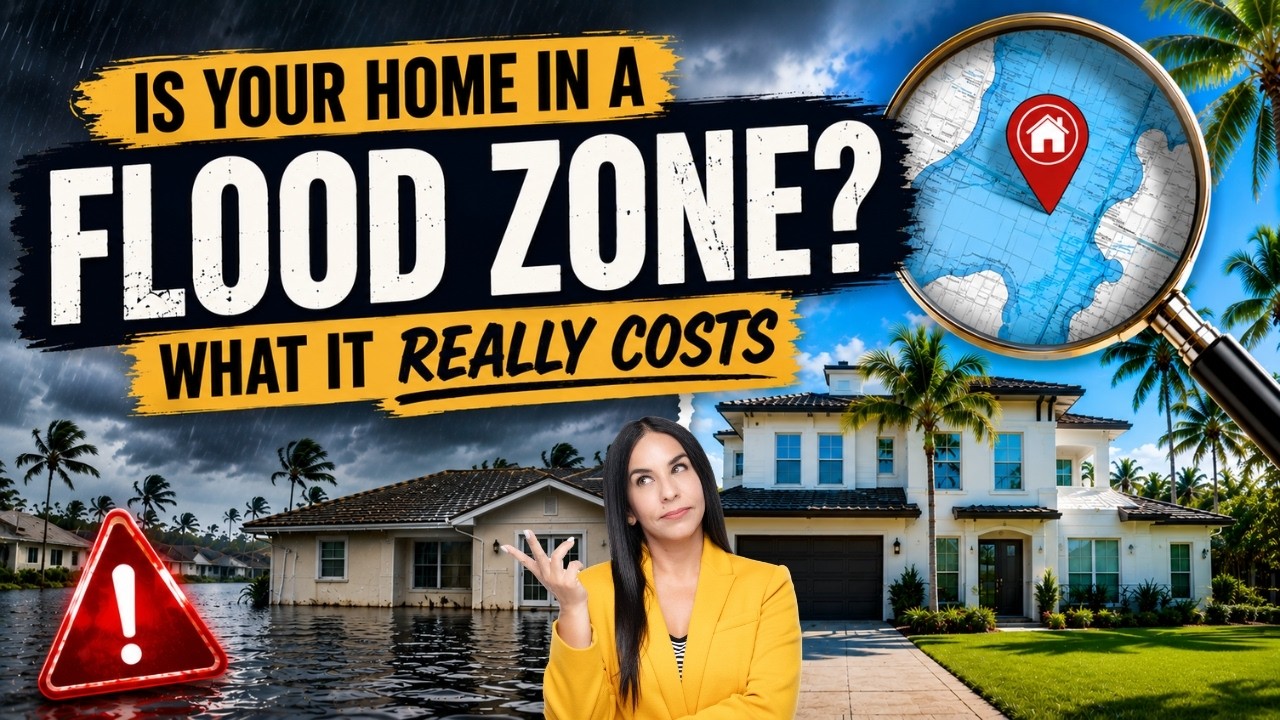
Flood zone versus non-flood zone might be the single most misunderstood factor in Fort Lauderdale real estate. Most people assume it is a simple question of whether a home sits on the water. It is not. The FEMA designation on a property affects your insurance, your financing, how the home was built, and in some cases what you are legally allowed to do to it later. In 17 years selling here, it is one of the very first things I pull for every homeowner I work with, before we ever talk about the house itself.
Here is what a flood zone designation really means, and the five things I check before anyone I work with writes an offer.
What a FEMA flood zone designation actually is
A flood zone is not a statement about whether a home has flooded. It is FEMA's estimate of a property's flood risk, drawn on a map. Fort Lauderdale properties generally fall into one of a few zones:
- X zone (and shaded X): lower-risk areas outside the 1 percent annual flood chance. Federally backed lenders do not require flood insurance here, though it is often still smart to carry it.
- AE zone: a high-risk area with an assigned Base Flood Elevation. If you have a federally backed mortgage, flood insurance is required.
- VE zone: the highest-risk coastal zone, exposed to wave action. Stricter construction rules and the highest premiums.
The key point: the zone is tied to the parcel, not to whether that specific house has ever taken on water.
Price does not predict flood risk
One of the most common assumptions I have to correct is that expensive homes are the dry ones and cheaper homes are the risky ones. It does not work that way. Some of the most valuable waterfront in Fort Lauderdale sits in AE and VE zones, and plenty of inland homes sit in X. The water view and the flood zone are two separate facts about a property, and you need to check both.
Why the age of the home changes the number
This is the part buyers miss most often. Two homes on the same street, in the same zone, can carry very different insurance costs, and the reason is usually when they were built.
- Homes built before the community's first flood maps were adopted often sit lower to the ground, without the elevation and construction standards required today.
- Newer and rebuilt homes are typically constructed to current elevation and code, which can lower the risk rating and the premium.
- An elevation certificate, which documents how high the lowest floor sits relative to the Base Flood Elevation, can be the difference between a comfortable number and a painful one.
If a listing is in a flood zone, the age and elevation of the structure tell you more about your future insurance bill than the address does.
Flood maps are not permanent
FEMA remaps areas periodically, and a home's designation can change. I have lived this personally: one of my own properties in Coral Ridge was remapped, and the designation on paper shifted without a single thing changing about the house. It cuts both ways. A remap can move a home into a higher-risk zone, or a well-documented property can be reclassified into a lower one through a Letter of Map Amendment. The lesson is simple: treat the current map as today's answer, not a permanent one, and know that documentation is what protects you when the map moves.
The trade-offs, honestly
Neither side is automatically better. It depends on what you want out of the home.
- Non-flood zone homes give you no lender-required flood insurance, generally lower carrying costs, and one less variable to underwrite. The trade-off is that in Fort Lauderdale, staying out of a flood zone usually means giving up direct water access.
- Flood zone homes are where the dock access, the water views, and the elevated waterfront construction live. The trade-off is real cost and code: required insurance, stricter rebuild rules, and premiums that swing hard with the age and elevation of the structure.
A flood zone is not a reason to walk away. It is a reason to do the math before you fall in love with the house.
The five things I check before an offer
Whenever a homeowner I work with is considering a property, waterfront or not, I walk through the same five steps:
- Pull the current FEMA flood zone designation for the exact parcel.
- Ask for an elevation certificate, or budget to get one.
- Get an actual insurance quote for that specific home, not a neighborhood estimate.
- Check when the home was built and whether it meets current elevation and code.
- Look at the map history and any pending remaps, so a future reclassification does not surprise you.
None of this is exotic. It is the same short list every time, and it is too important to leave to assumption.
Flood zone status is not something to be afraid of in Fort Lauderdale. It is something to understand before you commit. If you want the flood zone and insurance picture pulled on a home you are considering, reach out to me and my team. I do this with every homeowner I work with, and I would rather you know the number before the offer than after.
Want the real read on your neighborhood?
Connect with the luxury real estate agent Fort Lauderdale homeowners rely on for honest, data-driven guidance.
Schedule a Consultation