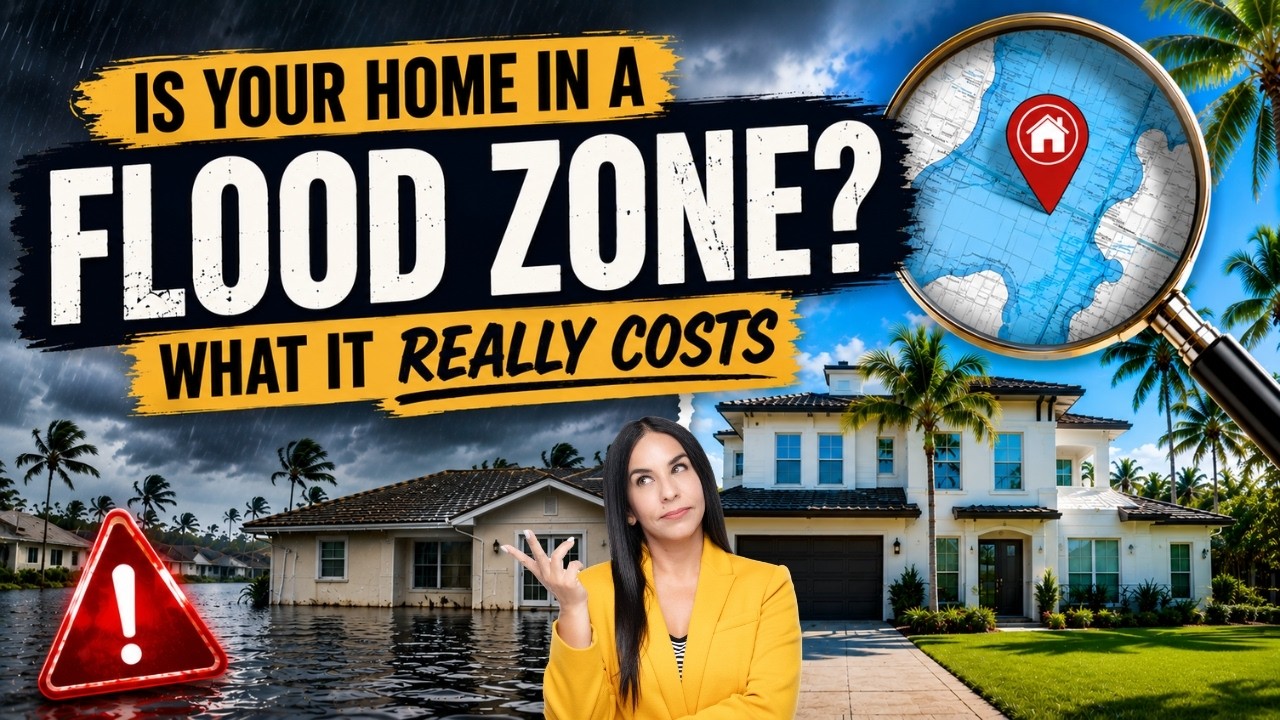
Is Your Fort Lauderdale Home in a Flood Zone? What It Really Costs
If you are buying or selling in Fort Lauderdale, one of the first questions that comes up is almost always the same: Is the property in a flood zone?
It sounds simple. It is not. Flood zone status is one of the most misunderstood factors in South Florida real estate. It is not just about whether a home sits on the water. It shapes insurance, financing, renovation rules, and long-term carrying costs.
In her latest video, Lourdes Maestres walks through what FEMA flood designations actually mean in the city of Fort Lauderdale, the real trade-offs on both sides of the map, and five practical steps to take before you fall in love with a home.
What a Flood Designation Actually Means
Flood zones are set by FEMA, the Federal Emergency Management Agency. They are based on elevation and flood risk, and they range from lower-risk areas to high-risk designations.
A property does not have to sit on the Intracoastal, a canal, or the ocean to fall inside a flood zone. Proximity to waterways, low elevation, and how water drains through a specific block all factor in. You can be several streets inland and still land inside a mapped boundary because of how the land sits and how stormwater and surge move through that pocket of the city.
That is why a neighborhood "feel" (this area seems far enough from the water) is not a substitute for pulling the official designation for the exact address.
Price does not protect you either. Lourdes has seen luxury waterfront estates outside a flood zone and more modest inland homes inside one, based purely on elevation and FEMA mapping. Buyers who assume a $10 million price tag means flood-zone free are often surprised. The reverse is true too: a quieter inland street is not automatically low risk.
FEMA maps also change. Over the last decade, Lourdes has seen Coral Ridge homes that were outside a flood zone later remapped into one, triggering flood insurance requirements for owners with a mortgage. She has lived that shift on one of her own Coral Ridge properties. The designation you see today is a technical call based on current data, not a forever label.
Pros of a Non-Flood Zone Home
Many buyers, especially those relocating from outside Florida, start with a strong preference for non-flood zone properties. Here is what that usually buys you:
Flood insurance is typically not required by the lender. That simplifies closing and removes a recurring annual cost. Over years of ownership, that savings is real money in the comparison between two otherwise similar homes.
Fewer building restrictions. Renovations and new construction outside a flood zone tend to avoid the extra elevation and design rules that apply inside one. If you are planning significant work, that difference shows up in both cost and complexity.
A clearer insurance and financing picture for you now, and for the next buyer when you sell. Predictability matters when you are modeling long-term ownership costs.
The main trade-off is location. Non-flood zone homes often sit farther from the water. If waterfront living, dock access, or a water view is the point of the move, that trade-off is not a footnote. Be honest about it up front.
Pros and Cons of Flood Zone Homes
For a lot of Fort Lauderdale buyers, the homes they actually want sit in a flood zone, because that is where waterfront and near-waterfront living often is.
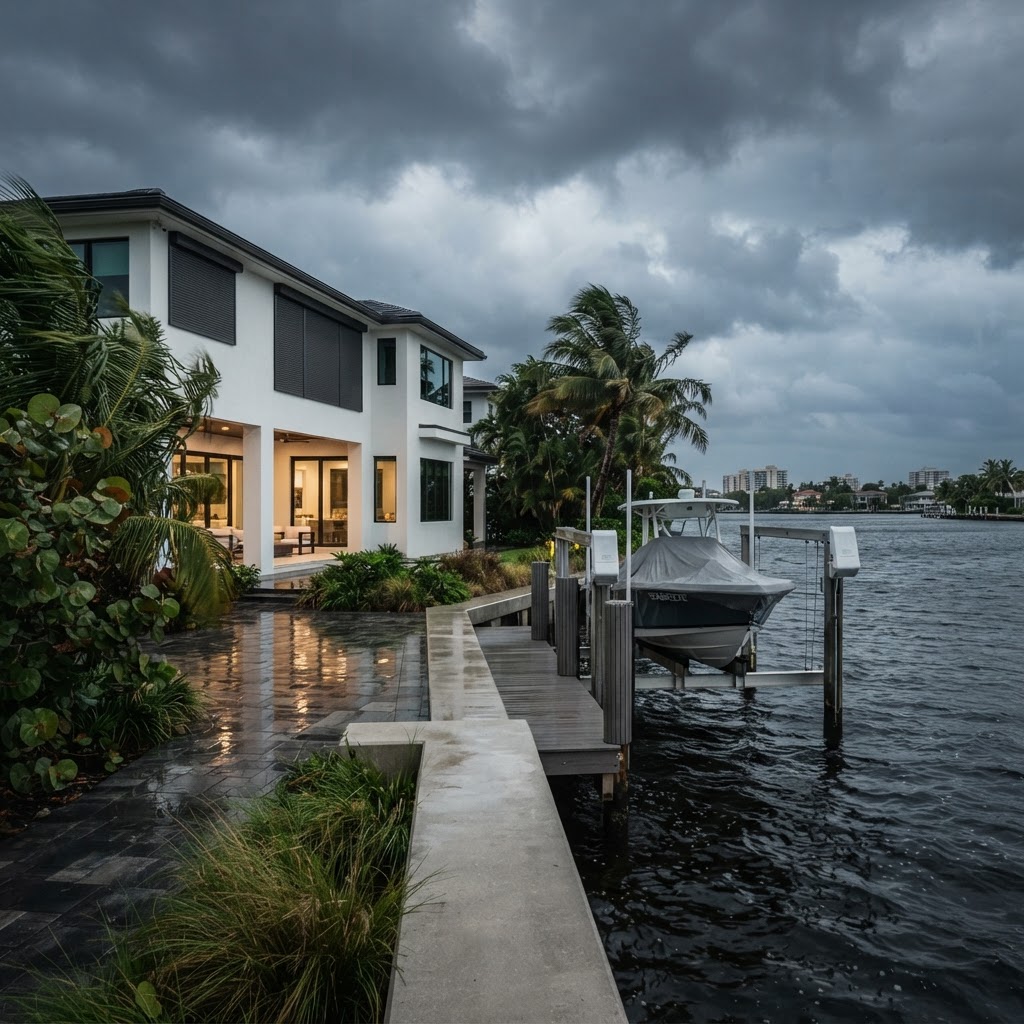
On the plus side: flood zone status frequently lines up with proximity to water, docks, and views. Newer construction in these areas is often designed with elevation and flood mitigation built in, with living levels raised above base flood elevation and garage and utility spaces planned for how water behaves in a storm.
On the cost side: lenders typically require flood insurance. That is an add-on to standard homeowners coverage, and the number can surprise buyers who only ran rough estimates. Renovations and new builds can also face extra code and elevation requirements.
Age and construction matter inside the same zone. Two homes on the same street can carry very different insurance costs if one was built decades ago to older standards and the other was built, or substantially rebuilt, to current elevation requirements. Always look at how the specific home was built, not just the letter on the map.
And again, maps get updated. Some owners see their designation improve after a remap; others see the opposite and have to adjust. Talking with an insurance broker early is part of doing this right.
Five Steps Before You Decide
Lourdes's practical framework for buyers and homeowners:
- Get the actual flood zone designation (and elevation certificate when available) before you fall in love with the home, not after.
- Get a real flood insurance quote, not a ballpark. Cost varies with elevation, construction type, and the specific zone.
- Understand the elevation the home was built to, especially on newer flood-zone construction. Homes built well above the minimum can look very different on risk and premium than ones that just clear the line.
- Fold flood cost into long-term ownership, not only closing day. Future buyers will run the same numbers.
- Remember waterfront and high-risk flood zone are not identical. Some homes get water proximity with elevation that keeps them out of the highest-risk designations.
Flood zone status is not something to fear, and it does not make a home a bad choice. Some of the most desirable properties in Fort Lauderdale sit in a flood zone. The goal is to go in with your eyes open: know the real cost, the real construction story, and the real insurance number before you write an offer, or before you price a listing.
How The MPH Team Can Help
Whether you are buying your first Fort Lauderdale home, upgrading to waterfront, or preparing to sell, flood zone diligence should happen early, alongside pricing, condition, and lifestyle fit. Lourdes and The MPH Team pull that picture for every property they evaluate, so you are comparing homes on the full cost of ownership, not just finishes and views.
Ready to talk through a home you are considering, or one you may sell? Contact The MPH Team at info@mphfortlauderdale.com or (954) 833-0933, or visit mphfortlauderdale.com.
Want the real read on your neighborhood?
Connect with the luxury real estate agent Fort Lauderdale homeowners rely on for honest, data-driven guidance.
Schedule a Consultation